Noticing patches of unwanted growth spreading through your grass is frustrating, especially when you’re not sure what you’re dealing with or how to stop it. Identifying what’s growing in your lawn is the first step toward getting rid of it for good. In this guide, Pear Tree Property Services will walk you through how to identify weeds in your lawn and how to tackle them.
For ongoing help keeping your yard in shape, our lawn maintenance services are available throughout Norwell.
Common Lawn Weeds and How To Identify Them
Learning how to identify weeds in your lawn starts with understanding that not all are the same. They fall into a few distinct categories based on their leaf structure and growth habit. Each type responds differently to treatment, so here’s a breakdown of the main groups.
Broadleaf Weeds
Broadleaf weeds are the easiest to spot because their wide, flat leaves stand out from grass blades. Common examples include dandelions, clover, plantain, and chickweed. Identify them by their distinct leaf shape and visible veins. They often show flowers or seed heads as well.
Grassy Weeds
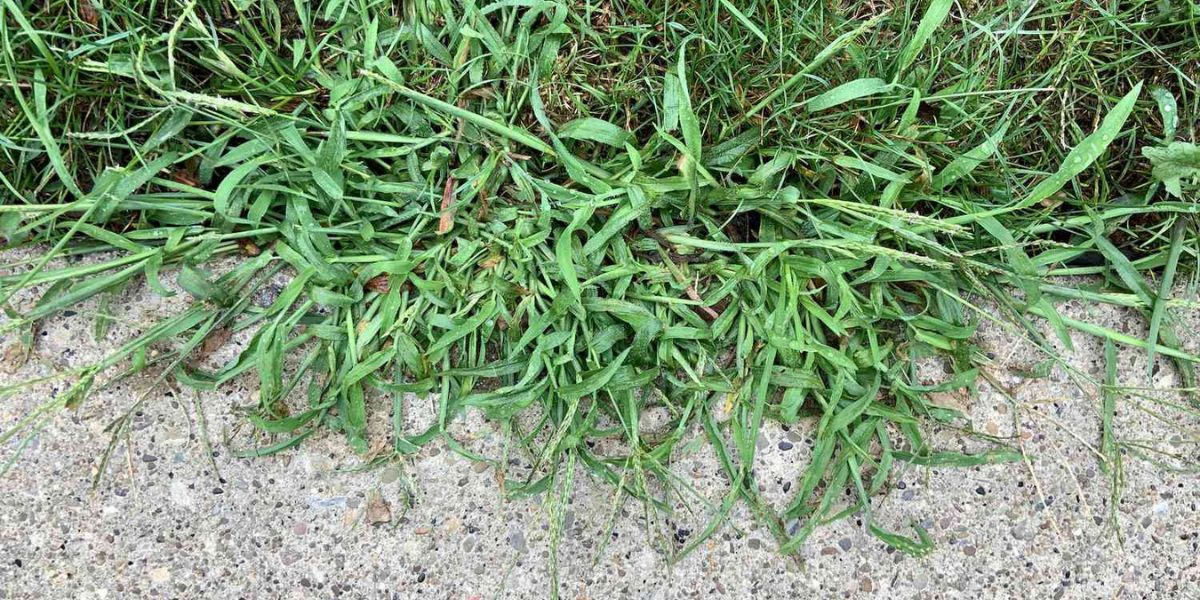
Grassy weeds are trickier to catch because they closely resemble lawn grass at first glance. Crabgrass and annual bluegrass are frequent culprits in New England yards.
Look for clumping growth patterns and coarser blades than your turf. You may also see stems growing from a central base rather than spreading evenly.
Sedges
Sedges look like grasses but have triangular stems rather than round ones, which is the easiest way to tell them apart. Yellow nutsedge is the most common variety and tends to grow faster than the surrounding grass, making it stand out during the growing season. If you run a blade between your fingers and feel distinct ridges or angles, you’re likely dealing with a sedge.
Annual Weeds
Annual weeds complete their entire life cycle in a single growing season, germinating, flowering, setting seed, and dying within one year. Crabgrass and chickweed are typical annuals that spread by dropping large numbers of seeds before they die. Catching them early, before they go to seed, is the most effective way to prevent them from returning, particularly when you pair identification with summer lawn care tips to boost turf health.
Perennial Weeds
Perennial weeds come back year after year because they store energy in deep root systems that survive winter. Things like dandelions and ground ivy fall into this category. With these weeds, pulling the top without removing the root often triggers regrowth.
Weed Control Solutions
Maintaining a perfect lawn means eliminating weeds quickly. Once you know what you’re dealing with, you can choose the right control method. Here are the most common approaches and when to use them:
- Hand-pulling: Works well for isolated broadleaf weeds and young annuals, especially after rain when the soil is loose
- Pre-emergent herbicides: Applied before weed seeds germinate in spring, preventing annual weeds like crabgrass from establishing
- Post-emergent herbicides: Used after weeds are visible to target actively growing plants
Remember that a thick, healthy lawn crowds out weeds before they establish, and addressing thin areas with lawn renovation help is critical to long-term weed suppression.
Overseeding bare spots and regular fertilization are among the most effective long-term deterrents.
Pear Tree Property Services Helps Norwell Lawns Stay Weed-Free
Knowing how to identify weeds in your lawn puts you ahead of the problem before it gets out of hand. At Pear Tree Property Services, we help Norwell homeowners build healthier lawns that resist weed pressure season after season. Staying on top of how often to mow your lawn is one simple habit that supports long-term weed control.
We offer full-service lawn care, landscaping, and weekly lawn mowing throughout Norwell to ensure your grass maintains the height needed to shade out weed seedlings. Call Pear Tree Property Services today at (781) 204-4348 for expert help with identifying weeds in your lawn and building a customized plan to keep them out.
FAQs
Here are quick answers to common questions about lawn weed identification.
The easiest way to distinguish a weed from grass is to look for differences in leaf width and growth pattern, as most weeds either have noticeably wider leaves than turf grass or grow in clumps rather than spreading uniformly.
Weeds keep coming back after pulling because perennial species store energy in deep roots that regenerate new growth, and annual species may have already dropped seeds before being removed.
Look at key features such as leaf shape and stem structure to narrow down the specific weed species you’re dealing with.